

In South Carolina’s coastal and Lowcountry climate, many roof leaks don’t start with missing shingles; they start with failing flashing. From Charleston and Mount Pleasant to Summerville, Myrtle Beach, and Florence, homes are exposed to wind-driven rain, high humidity, and salt air that put extra stress on roofing systems.
Understanding how roof flashing works, why it fails, and what warning signs to watch for can help you avoid costly water intrusion and long-term structural damage.
What Is Roof Flashing and Why It Matters
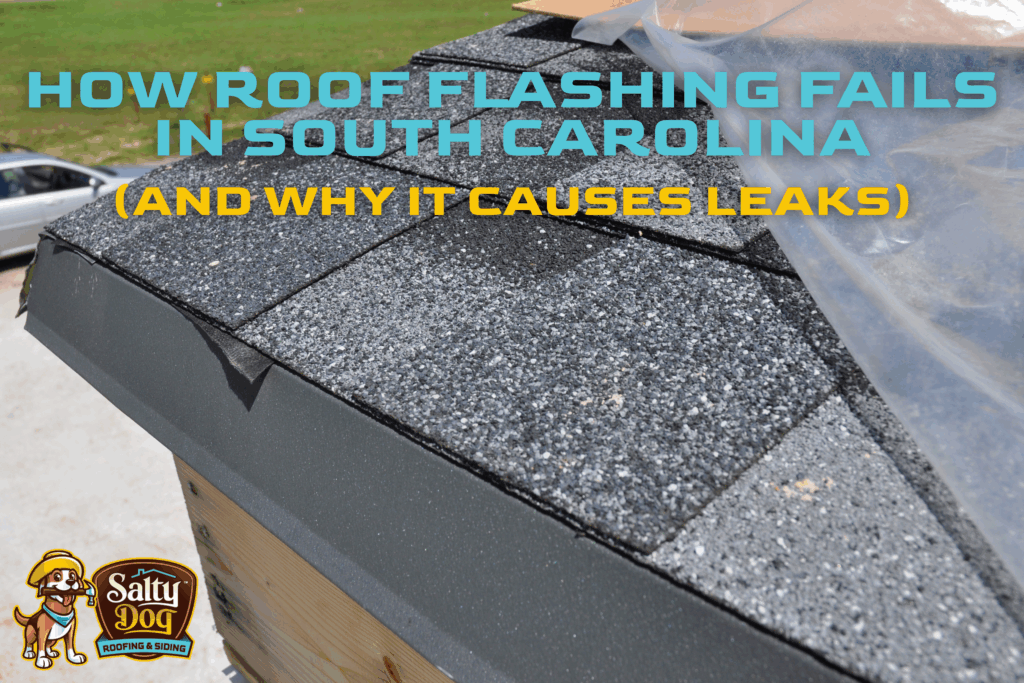
Roof flashing is a thin, usually metal, material installed at vulnerable areas of your roof to prevent water intrusion. Its purpose is to redirect water away from seams, joints, and penetrations where leaks commonly start.
Flashing is critical around:
- Chimneys, vents, and skylights: These create natural weak points in the roof surface.
- Roof transitions and valleys: Areas where roof planes meet need extra protection.
- Walls and dormers: Flashing seals the joint between roofing and vertical surfaces.
Because flashing is part of your roof’s waterproofing system, not just a finishing detail, it plays a major role in long-term roof leak prevention.
Common Roof Flashing Problems in South Carolina Homes
Homes across Charleston County, Berkeley County, Dorchester County, Horry County, Georgetown County, and Florence County face harsh conditions that accelerate flashing failure.
Common causes include:
- Wind-driven rain and coastal moisture: Storms in Goose Creek, Moncks Corner, Murrells Inlet, and Charleston, SC, often push water into small gaps.
- Corrosion from humidity and salt air: Especially common in Mount Pleasant, Myrtle Beach, and North Myrtle Beach.
- Improper installation or aging materials: Even good roofs can fail if flashing was installed incorrectly or has reached the end of its lifespan.
These issues often become hidden roof leak causes, with water traveling inside the roof system before stains ever appear.
Flashing Around Chimneys: One of the Most Common Leak Sources
Chimneys are one of the most frequent sources of flashing-related leaks.
They require both:
- Step flashing: Layered with shingles along the sides.
- Counter flashing: Embedded into masonry to cover and seal the step flashing.
When either fails, leaks are likely.
Signs chimney flashing is failing include:
- Stains near the chimney
- Rusted or loose metal
- Cracked mortar joints around flashing
In some cases, resealing or partial repair works. In others, full replacement is the only reliable solution.
Roof Installation & Repair
Shingles, GAF systems, storm damage
Siding Installation & Upgrades
Hardie, vinyl, energy-efficient options
Gutter Systems
Seamless gutters, gutter guards, repairs

Window & Door Replacements
Energy-saving, stylish, secure
Fascia, Soffit & Trim Work
The little details that protect the big investment
Metal Roof Flashing vs. Shingle Roof Flashing
Both roof types rely on flashing, but the materials and failure points differ.
- Shingle roofs: Typically use aluminum or galvanized steel flashing layered with shingles.
- Metal roofs: Use custom-bent metal roof flashing designed for panel or standing seam systems.
Metal roof flashing can last longer, but in coastal environments, corrosion, fastener failure, and movement can still cause leaks.
How Storms and High Winds Damage Roof Flashing
South Carolina storms often damage flashing before shingles.
- High winds: Can lift or bend flashing edges.
- Flying debris: Can dent or dislodge flashing around chimneys and vents.
- Why flashing fails first: It’s thinner and more exposed than shingles at edges and transitions.
After storms in Conway, Summerville, or Florence, many leaks trace back to flashing, not missing shingles, which is why storm roof repair inspections must include flashing.
How Roof Flashing Failure Leads to Water Intrusion
Even small gaps in flashing can allow moisture into the roofing system. This can lead to rotting roof decking, wet insulation, and damage to ceilings and walls. Flashing-related leaks often get worse during extended winter rain and storm cycles because moisture stays trapped longer inside the roof structure.
Warning Signs You May Need Roof Flashing Repair
Watch for:
- Interior stains or damp spots
- Dripping near chimneys, vents, or skylights
- Rusted, loose, or lifted flashing
- Active leaks that require roof flashing repair
If you already have leaks, proper roof leak repair must include inspecting and addressing flashing—not just replacing shingles.
How Professional Roof Flashing Repair Prevents Future Leaks
Proper repair means:
- Using correct, corrosion-resistant materials
- Ensuring compatibility with your roofing system
- Rebuilding the flashing system, not just patching it
In some cases, especially on older roofs, flashing upgrades are best handled during a new roof installation for a fully integrated waterproofing system.
- Locally Owned & Operated
- 25+ Years of Roofing & Siding Experience
- 0% Financing Available
- Emergency Services 24/7
- Licensed, Insured, & Trusted by Your Neighbors
Protect Your Home With Expert Roof Flashing Repair From Salty Dog Roofing
From Charleston and Mount Pleasant to Myrtle Beach, Conway, Summerville, and Florence, homes across the region face weather conditions that make flashing failure one of the most common roof leak causes.
Salty Dog Roofing serves homeowners throughout Charleston County, Berkeley County, Dorchester County, Horry County, Georgetown County, and Florence County, with experience handling both age-related and storm roof repair issues.
If you’ve noticed warning signs or want to prevent problems before the next storm, schedule a professional inspection to protect your home from serious water intrusion.

Let’s Talk About Your Next Project
Contact us today to schedule your free consultation. Let’s build something strong, beautiful, and tail-waggingly good — together.
Frequently Asked Questions About Roof Flashing Repair
What is roof flashing, and why is it important for preventing leaks?
Roof flashing is a metal material installed at roof penetrations and transitions to direct water away from vulnerable areas. It prevents water intrusion where shingles alone cannot provide a watertight seal.
What are the most common roof flashing problems in South Carolina homes?
The most common problems include corrosion from salt air and humidity, storm-related damage, and failures caused by improper installation or aging materials—especially around chimneys and vents.
Does metal roof flashing last longer than flashing on shingle roofs?
Yes, metal roof flashing can last longer, but in coastal environments, it can still fail due to corrosion, movement, or fastener issues if not properly installed.
Can storm damage cause roof flashing to fail before shingles do?
Yes. Flashing is thinner and more exposed, so high winds and debris often damage flashing before shingles show visible signs of failure.
When should I call a professional roofer to inspect roof flashing issues?
You should call a professional if you see stains, active leaks, loose or rusted flashing, or after any major storm—even if you don’t see obvious roof damage.