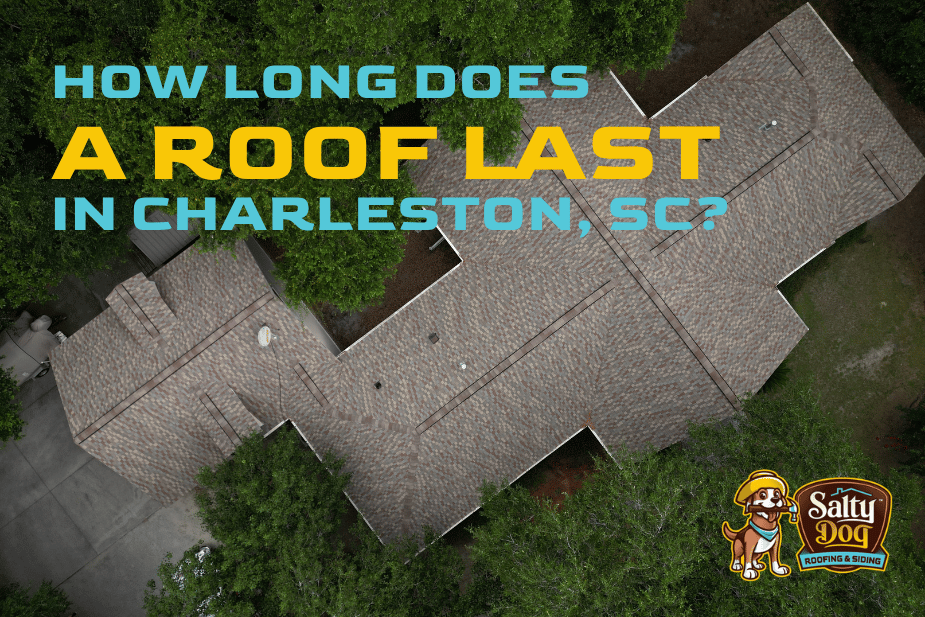
Most roofs in Charleston, SC, last about 15 to 25 years if they’re asphalt shingles, and 40 years or more if they’re metal or tile. The coastal climate is why most shingle roofs here land toward the low end of national averages: salt air, intense summer heat, constant humidity, and hurricane-season winds all speed up wear.
So, how long does a roof last in Charleston, SC for your home specifically? It depends on the material, installation quality, attic ventilation, and how close you live to salt water.
The Short Answer: Average Roof Lifespan in Charleston
When it comes to average roof lifespan, South Carolina’s coast is tougher on roofing than most of the country. A home a few miles from Charleston Harbor faces conditions an inland roof never will. Here’s how typical national ranges compare with what we realistically see on Lowcountry homes:
- 3-tab asphalt shingles: 15–20 years nationally, 12–18 years in the Lowcountry. The thinnest shingle option and the most vulnerable to wind uplift.
- Architectural shingles: 25–30 years nationally, 18–25 years in the Lowcountry. The most common choice, with higher wind ratings.
- Standing-seam metal: 40–70 years nationally, 40–60 years in the Lowcountry. Coastal-grade coatings and fasteners make a big difference.
- Concrete or clay tile: 50+ years nationally, 40–50+ years in the Lowcountry. The underlayment often needs replacing before the tiles do.
- Flat and low-slope roofs (TPO, modified bitumen): 15–25 years nationally, 15–20 years in the Lowcountry. Ponding water and UV exposure are the main threats.
To estimate roof lifespan, Charleston, SC homeowners should start with the material, then factor in installation quality, ventilation, maintenance history, and exposure to salt and wind.
Roof Lifespan by Material in Coastal South Carolina
Asphalt Shingle Roofs (3-Tab vs. Architectural)
Asphalt shingles cover most homes in the Charleston area because they’re affordable and versatile. So how long do shingle roofs last in Charleston? Three-tab shingles, the thinner and flatter style, typically give 12 to 18 years here. Architectural (dimensional) shingles are thicker and carry higher wind ratings, so you can expect an architectural shingles lifespan of roughly 18 to 25 years with proper installation.
Choosing GAF-certified shingles installed by a certified contractor also opens the door to stronger manufacturer warranty coverage. Keep in mind that a “30-year” or “lifetime” label describes warranty terms, not how long a shingle will physically last on the coast.
Metal Roofs
Metal is the long-haul option. Standing-seam systems commonly last 40 to 60 years in coastal South Carolina and perform well in high winds. Near the water, the details matter: coastal-rated coatings, compatible corrosion-resistant fasteners, and, in oceanfront settings, aluminum panels instead of steel all help prevent rust. The tradeoff is a higher upfront cost.
Tile Roofs
Concrete and clay tile can last 50 years or more, and the tiles themselves rarely wear out first. The weak point is usually the underlayment beneath them, which may need replacing after 20 to 30 years. Tile is also heavy, so the roof structure must be rated to carry the load.
Flat & Low-Slope Roofs
Flat and low-slope sections on porches, additions, and some newer homes typically last 15 to 20 years here. Standing water after summer downpours and constant UV exposure breaks down membranes like TPO and modified bitumen faster than steep-slope roofing.
Why Roofs Age Faster in the Lowcountry
Lowcountry roofing faces several stresses at once, and they compound each other over time. Here are the biggest drivers of shortened roof life expectancy. Coastal homes feel every one of them.
Salt Air & Coastal Corrosion
Salt air roof damage is gradual, which makes it easy to miss. Salt carried on the breeze settles on roofs across Charleston, Mount Pleasant, and the barrier islands, where it corrodes metal flashing, drip edge, vents, and exposed fasteners. Those small failures are where many leaks begin, and homes closest to the water usually see them first.
Heat, UV Exposure & Humidity
Long, hot summers bake shingles from above, while a poorly ventilated attic cooks them from below. Over time, asphalt shingles dry out, shed granules, and curl. Humidity adds another layer: shaded roofs are prone to algae streaks, moss, and mildew that hold moisture against the surface. Deteriorating soffit and fascia can also let moisture and pests into the roof edge.
Hurricanes, High Winds & Summer Storms
Hurricane season runs June through November, and afternoon thunderstorms are routine all summer. High winds can lift and crease shingles even when none blow off, breaking the seal that keeps water out. That hidden damage is a common part of the hurricane roof damage South Carolina homeowners deal with, and it quietly shortens a roof’s life if no one catches it. After a major storm, a storm damage roof repair inspection can document problems for your insurance claim.
Attic Ventilation & Installation Quality
A roof is only as good as its installation. Incorrect nailing, missing starter strips, or reused flashing can cut years off even premium shingles. Ventilation matters just as much: balanced intake at the soffits and exhaust at the ridge lets heat and moisture escape, so shingles don’t age from the inside out.
Signs Your Charleston Roof Is Nearing the End of Its Life
Age is only one clue. Watch for these signs you need a new roof, or at least a professional evaluation:
- Your shingle roof is 15 or more years old and hasn’t been inspected recently.
- Shingles are curling, cracking, blistering, or missing.
- Granules are collecting in gutters or at downspouts.
- Water stains are showing up on ceilings or in the attic.
- Flashing around chimneys, vents, or walls is rusted, loose, or separating.
- The roofline sags, or you can see daylight through attic boards.
- You’ve needed repairs in different areas several times in a few years.
Repair or Replace? How to Decide
The repair vs. replace roof decision usually comes down to age, how widespread the damage is, and how much you’ve already spent on fixes. Isolated problems on a roof with plenty of life left, such as a few missing shingles, a single leak, or a failed pipe boot, are good candidates for roof repair.
Replacement makes more sense when the roof is near or past its expected Lowcountry lifespan, damage is spread across multiple areas, or repairs keep adding up. Knowing when to replace a roof in Charleston, SC comes down to honest numbers: if repair costs are approaching a meaningful share of a new roof, replacement is usually the better investment. See how our roof replacement Charleston, SC process works, and ask about 0% financing on qualifying projects.
How to Get More Years Out of Your Roof
You can’t control the weather, but a few habits help a roof reach the high end of its range. Schedule an inspection every year and after major storms, address small leaks quickly, and trim limbs that overhang the roof. Keep water moving off the roof edge with properly sized gutters; our gutter installation and repair crews can fix sagging or undersized systems, and gutter guards cut down on clogs from leaves and pine straw. Finally, make sure your attic is properly ventilated.
Schedule a Roof Lifespan Inspection With Salty Dog
For a roof inspection, Charleston, SC homeowners can count on Salty Dog Roofing & Siding. We check your shingles, flashing, ventilation, and gutters, then give you a straight answer on how many years your roof has left.
We serve homeowners across Charleston, Mount Pleasant, North Charleston, Summerville, Goose Creek, and the rest of Charleston County, along with our wider Lowcountry service area. Explore our residential roofing options and full lineup of roofing and exterior services, then request your free estimate online.
FAQs About Roof Lifespan in Charleston, SC
How long does a roof last in Charleston, SC?
Most asphalt shingle roofs in Charleston last 15 to 25 years, while metal and tile roofs last 40 years or more. Salt air, heat, humidity, and storms push many roofs toward the lower end of national ranges. Where your roof lands within that range depends on the quality of the original installation, how well the attic is ventilated, how close your home sits to the water, and whether small problems get caught and fixed early through regular inspections.
How long do architectural shingles last in coastal South Carolina?
Architectural shingles typically last 18 to 25 years in coastal South Carolina, compared to 25 to 30 years in milder climates. Their thicker, layered design holds up better against wind than 3-tab shingles, but summer heat and humidity still take a toll. Correct nailing, balanced attic ventilation, and high-wind-rated products help them reach the upper end of that range, especially on homes in Mount Pleasant, the islands, and other areas close to the water.
How long does a metal roof last near the ocean?
A standing-seam metal roof near the ocean typically lasts 40 to 60 years when it uses coastal-rated coatings and corrosion-resistant fasteners. In oceanfront settings, aluminum panels are often recommended over steel because they resist salt corrosion better. Installation details matter as much as the panels themselves: mismatched metals, exposed fasteners, and poorly sealed trim are the usual weak spots, so an occasional inspection of seams and flashing helps a coastal metal roof reach its full lifespan.
Does salt air shorten the life of a roof?
Yes. Salt air corrodes metal flashing, vents, drip edge, and fasteners, and it can accelerate wear on shingle surfaces. The damage is gradual, so it often goes unnoticed until a leak appears around a chimney, skylight, or roof-to-wall joint. Homes on or near the water usually benefit from more frequent inspections and from corrosion-resistant components during installation, because failing flashing is one of the most common sources of leaks on coastal roofs.
Can a shingle roof last 30 years in Charleston?
It’s possible but uncommon. Most shingle roofs in Charleston need replacement before 30 years because of heat, humidity, and storm exposure. A well-installed architectural or premium shingle roof with balanced ventilation and regular maintenance has the best chance of lasting past 25 years. Homes farther inland, such as in Summerville or Goose Creek, with good shade management and no major storm damage, are more likely to reach the upper end than oceanfront homes.
How often should a Charleston roof be inspected?
Charleston roofs should be inspected at least once a year, ideally in spring before hurricane season begins on June 1. Add an inspection after any major storm, even if you don’t see damage from the ground, since lifted shingles and broken seals are hard to spot without getting on the roof. Older roofs and homes close to the water may benefit from twice-yearly checks, which make it easier to catch flashing and ventilation issues before they turn into leaks.
Should I repair or replace a 20-year-old roof?
If a 20-year-old shingle roof shows widespread wear, heavy granule loss, or recurring leaks, replacement is usually the better value because it’s near the end of its Lowcountry lifespan. If the damage is isolated and the rest of the roof is sound, a repair can buy a few more years. A professional inspection is the best way to decide, since it shows whether problems are limited to one area or signal that the entire roof is wearing out.
How can I tell how old my roof is?
Check your home purchase paperwork, previous inspection reports, or local building permit records, since roof replacements typically require a permit. Previous owners or the original roofing contractor may also have warranty documents that list an installation date. If those aren’t available, a roofing contractor can estimate age during an inspection based on shingle style, granule loss, and overall wear, which also tells you how much useful life the roof likely has left.

Contact us today to schedule your free consultation. Let’s build something strong, beautiful, and tail-waggingly good — together.